
What is Play Therapy?
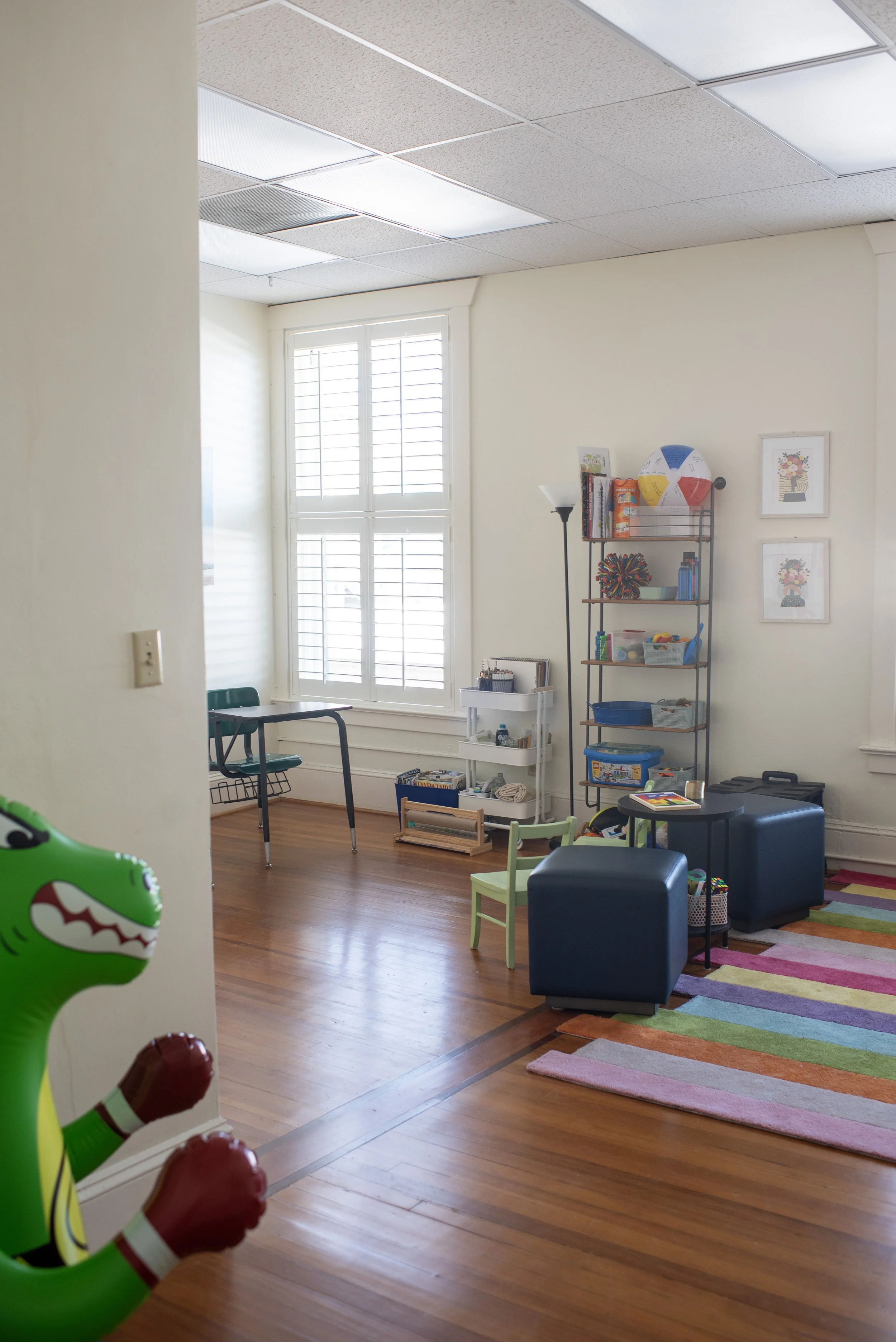
Children make sense of the world through play. Child-centered play therapy is an evidence-based approach for ages 3 to 12. Because children’s verbal and abstract reasoning skills are still developing, talking about big emotions can feel out of reach. The playroom is a space where kids can express feelings and process experiences they may not yet have words for. Through play, children lead the way, and healing can happen.
Virginia Axeline’s 8 Principles of Play Therapy
1. The therapist must develop a warm, friendly relationship with the child, in which good rapport is established as soon as possible.
2. The therapist accepts the child exactly as they are.
3. The therapist establishes a feeling of permissiveness in the relationship so that the child feels free to express their feelings completely.
4. The therapist is alert to recognize the feelings the child is expressing and reflects those feelings back in such a manner that the child gains insight into their own behavior.
5. The therapist maintains a deep respect for the child’s ability to solve their own problems if given an opportunity to do so. The responsibility to make choices and to institute change is the child’s.
6. The therapist does not attempt to direct the child’s actions or conversation in any manner. The child leads the way; the therapist follows.
7. The therapist does not attempt to hurry the therapy along. It is a gradual process and is recognized as such by the therapist.
8. The therapist establishes only those limitations that are necessary to anchor the therapy to the world of reality.
Axline (1969, p. 73)
Play Therapy can help:
Anxiety
Stress
'Big’ feelings
Emotional dysregulation
Bereavement and Loss
Parental Separation/Divorce
Social and Relationship concerns
Communication issues
Challenges related to neurodiversity
School refusal
Transitions
Trauma
Sessions involve
Art – painting, drawing, creating
Sensory Play – Engaging their senses though Slime making and Kinetic sand
Movement – Using balance toys, making their own fidget toys, dance, play fighting
Mindfulness – Practicing child friendly breathing exercises, using imagery to calm the nervous system
Games – Engaging in games the child enjoys, for relationship building,
Legos – Using Legos for creative expression